
Tutorial
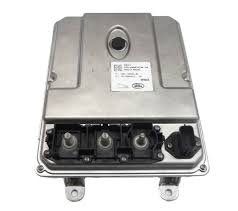
What is a Land Rover MHEV 48V DC-DC Converter?
Oct
Understanding the Heart of Your Land Rover's MHEV System: The DC-DC Converter
If you own a modern Land Rover with a Mild Hybrid (MHEV) engine, you have a sophisticated 48V electrical system working alongside the traditional 12V system. The crucial component that links these two worlds is the 48V to 12V DC-DC Converter. This guide explains what it is and why it's so important.
The Two Voltages in Your MHEV
Your MHEV Land Rover has:
- A 48V system that powers the Belt-integrated Starter Generator (BiSG). The BiSG acts as a powerful motor to assist the engine and as a generator to recharge a small 48V lithium-ion battery during braking.
- A 12V system that powers everything else: lights, infotainment, windows, and all the control modules. This system uses a conventional 12V battery.
Crucially, MHEV models do not have a traditional alternator to charge the 12V battery.
The Role of the DC-DC Converter
The DC-DC converter's job is simple but critical: it acts as the modern alternator. It takes the high-voltage power from the 48V system and ‘steps it down' to a lower voltage (~14V) to continuously charge the 12V battery and power the 12V electrical network while the vehicle is running.
How it Works
- The 48V BiSG generates power and stores it in the 48V battery.
- The DC-DC converter draws power from this 48V supply.
- It converts the 48V DC power into ~14V DC power.
- This ~14V power is fed directly to the 12V battery and other 12V systems, keeping them running and fully charged.
Without a functioning DC-DC converter, the 12V battery will not be charged, and the vehicle will quickly become inoperable. If you've been diagnosed with a faulty unit, find the genuine replacement part here.


